Porsche Motorsport adopts revolutionary driving simulation technology from VI-grade
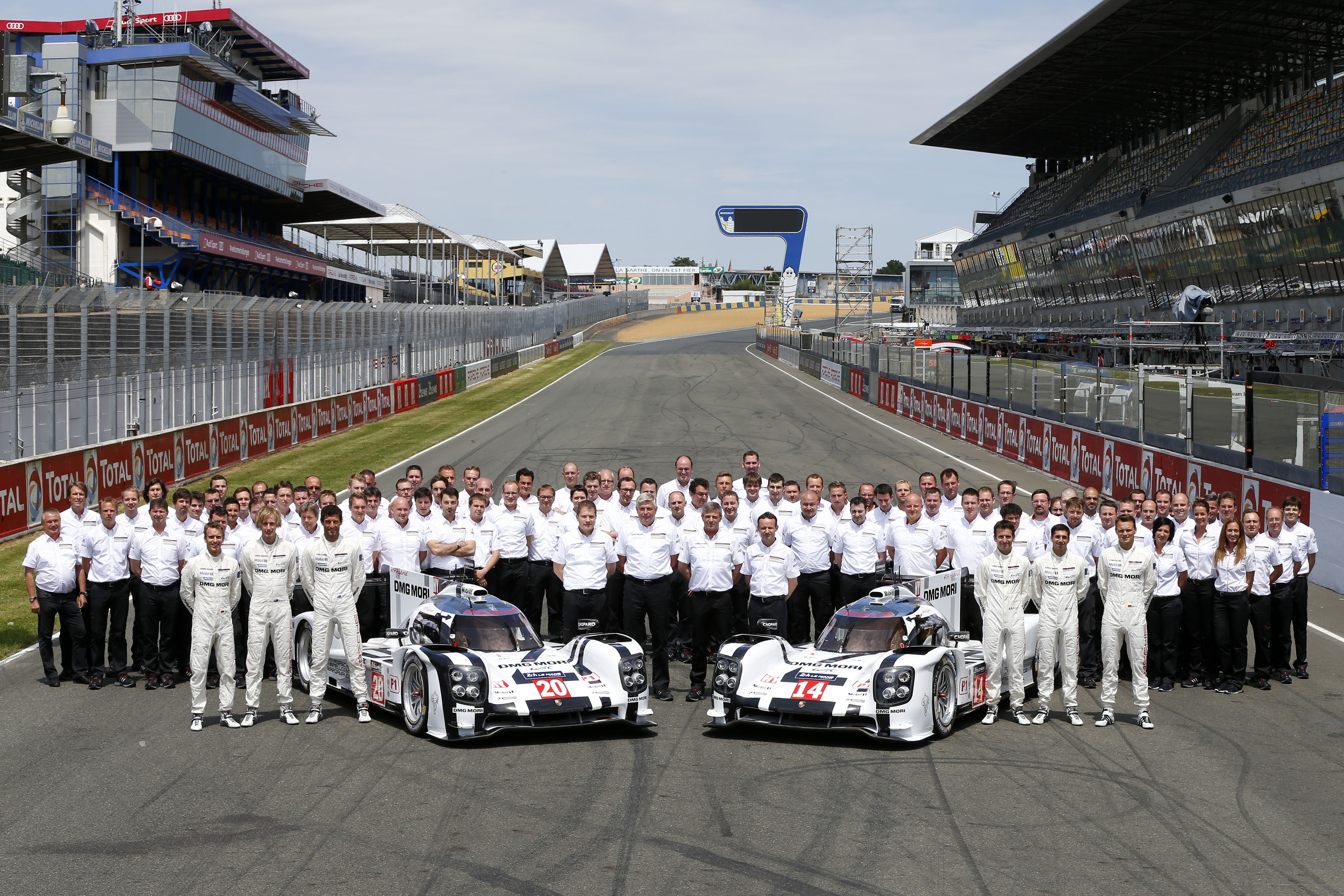
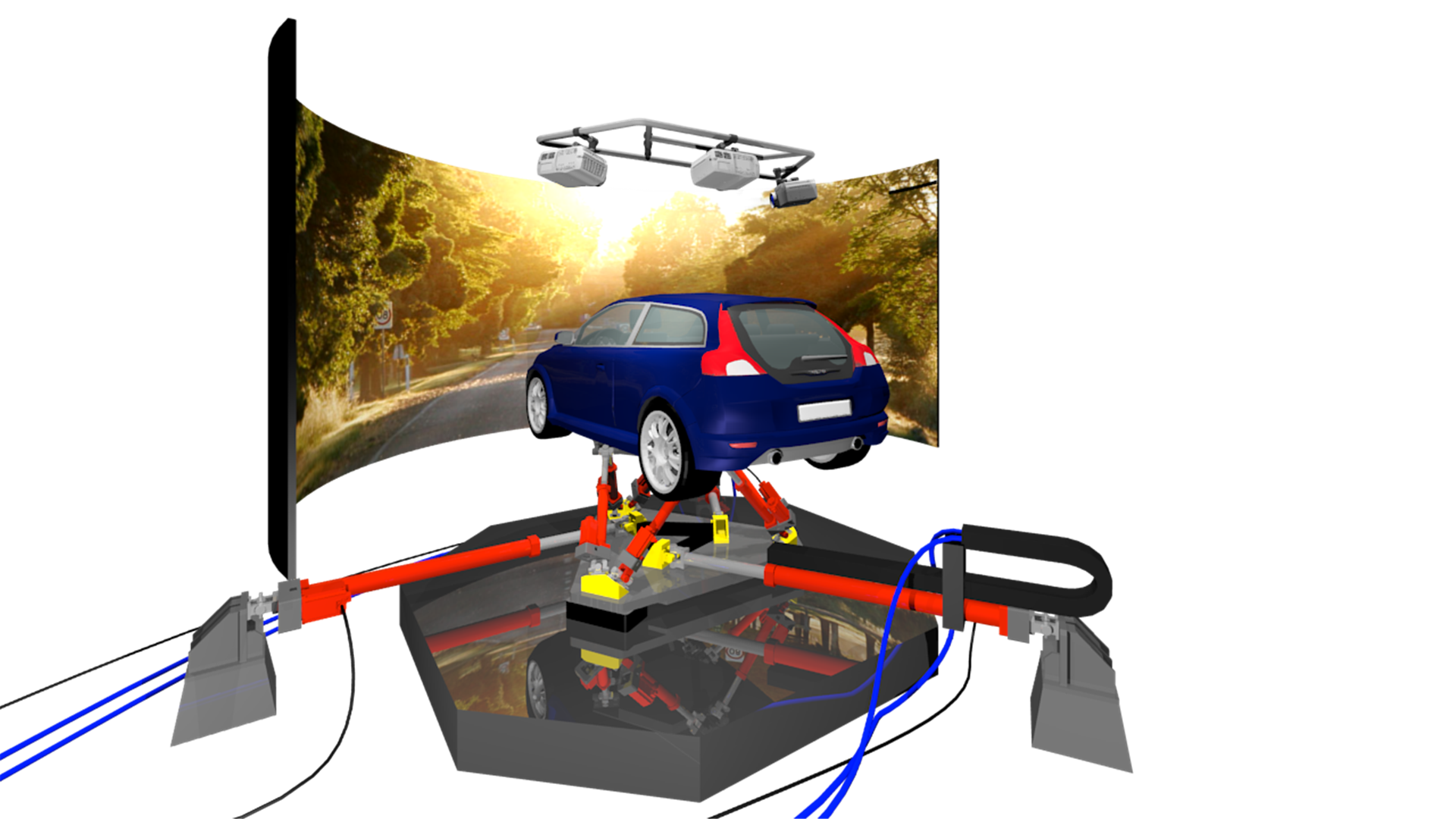
Marburg, Oct 9th, 2014 – VI-grade, the leading provider of best-in-class software products and services for advanced applications in the field of system-level simulation, today announced that Porsche Motorsport selected the newly developed motion platform named DiM (Driver in Motion). The new dynamic platform for the driving simulator has been installed at the Porsche Motorsport site in Weissach, Germany and will be used for testing and optimizing the setup of new racing cars. The first vehicle to be tested on this new platform is the new Porsche LMP1 sports prototype, which is competing in the sports car World Endurance Championship (WEC) and in the 24 Hours of Le Mans from 2014.
The 9 degrees-of-freedom DiM platform has been designed in order to take full advantage of VI-MotionCueing, a very innovative motion cueing strategy developed by VI-grade in collaboration with the University of Padua (Italy). The technology enables the extension of the motion envelope and the separation of low and high frequency contributions, which makes this type of motion platform suitable for both vehicle dynamics and ride studies.
“We are extremely happy to report this commercial success at Porsche Motorsport”, said Juergen Fett, Managing Director, VI-grade. “Together with Saginomiya and other technology vendors we have built this complex vehicle simulator to establish it in a competitive environment of a world leader in sportscars and racecars and Porsche Motorsport, thanks to its expertise in worldwide known racing cars, represents for us the ideal customer for the deployment of the innovative DiM technology in the motorsport industry.”
For additional information on how Porsche Motorsport uses VI-grade’s DiM technology to optimize the performance of their vehicles and to better interact with its factory drivers, please check this video (courtesy of German channel N-TV).
About Porsche Motorsport
World famous car manufacturer Porsche has been successful in many branches of motorsport of which most have been in long distance races. Despite their early involvement in motorsports being limited to supplying relatively small engines to racing underdogs up until the late 1960s, by the mid-1950s Porsche had already tasted moderate success in the realm of sports car racing, most notably in the Carrera Panamericana and Targa Florio, classic races which were later used in the naming of street cars. The Porsche 917 of 1969 turned them into a power house, winning in 1970 the first of 16 “24 Hours” of Le Mans, more than any other company. With the 911 Carrera RS and the Porsche 935 Turbo, Porsche dominated the 1970s, and sometimes even has beaten sports prototypes – a category in which Porsche entered the successful, Le Mans-winning 936, 956 and 962 models.
Porsche is currently the world's largest race car manufacturer. For example: Based on the Porsche 911, Type 997, the company has built and sold nearly 1.700 GT-Racecars (GT3 Cup, GT3 R, GT3 RSR). Porsche regards racing as an essential part of ongoing engineering development—it was traditionally very rare for factory-entered Porsche racing cars to appear at consecutive races in the same specification. Some aspect of the car almost invariably, was being developed, whether for the future race programs or as proof of concept for future road cars. Since the decision in mid-2011 to return with the LMP1 racer to top motorsport as a works effort, the Motorsport Centre at Weissach has grown significantly. A workshop and an administration building were built and accommodate more than 200 employees who are responsible for the design, assembly and deployment of the LMP1 car. Since the beginning of the 2014 WEC season, the racer is fielded by a Weissach-based works squad. For additional information, click here.
About Saginomiya
Saginomiya is the leading provider of automatic controls and test systems in Japan as and is very highly reputed throughout the world for the quality of its products. Saginomiya started developing, manufacturing and selling test systems in 1964, expanding in several business fields such as civil engineering and construction, industrial machinery, railway services, power generation, aviation and automotive. Saginomiya’s “Dynamic Servo” has been developed as the ideal test systems utilizing state-of-the-art core technologies such as electric and hydraulic hybrids as well as a next-generation simulator. Saginomiya is are highly committed to serve the needs of the most technically advanced customers in the global market. For further information, click here.
Bombardier Transportation GmbH predicts wheel wear with VI-grade railway solutions
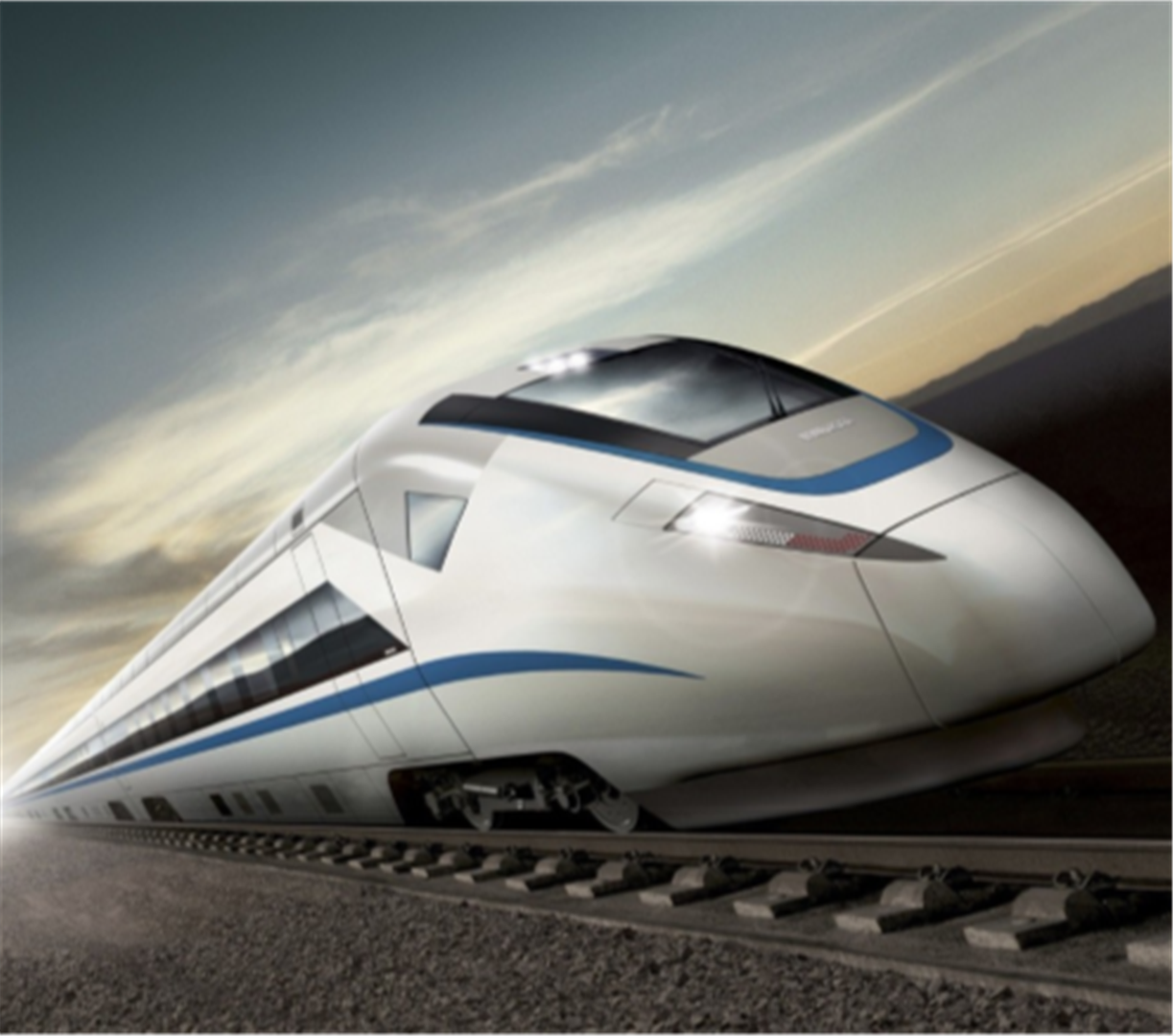
The company, that covers the full spectrum of rail solutions, ranging from complete trains to sub-systems, maintenance services, system integration and signalling, will use VI-Rail specifically for wear simulations. In particular the company is using the brand new VI-Rail Wear and Stress Toolkit available with the latest VI-Rail version and developed in collaboration with ArgeCare (Walter Kik), with the objective of designing low – or virtually zero – maintenance vehicles.
Click below for an extended video interview to Fon Azobi, Vehicle Dynamics Engineer – Bogies, Bombardier Transportation GmbH.
“The growing need for simulation is always going to be a big player in the rail industry and one of the aspects that’s been a major player in recent times is the wheel-rail interaction,” says Fon Azobi, Vehicle Dynamics Engineer– Bogies, Bombardier Transportation GmbH. “We have different simulation packages for different applications and we use VI-Rail specifically for wear simulations. The software is very easy to use and the simulation speeds are actually very high. Through detailed wear prediction simulation, we aim to increase the life time of our wheels, in order to obtain a lower total cost of ownership of our products, which is a unique advantage that we can offer to our customers”.
“We are extremely happy to report this important success in the railway industry,” says Guido Bairati, International Sales Director, VI-grade. “This demonstrates the efficiency of our development strategies, always looking for new features demanded by the market. We are looking forward to expanding the usage of our solutions for wear and stress predictions within Bombardier Transportation and other major railway companies!”
About VI-Rail
VI-Rail is the specialized railway simulation software from VI-grade. VI-Rail enables to quickly build a complete, parameterized model of a new railway vehicle, easily define its suspension, wheelset, wheel-rail contact, and other vital characteristics. Running through a battery of simulations it is possible to determine the vehicle’s stability, derailment safety clearance, track load, passenger comfort, and more. The performance of a railway vehicle design can be optimized virtually in the computer, before cutting a single piece of metal or running a single physical test. VI-Rail users can instantly see the effects of design changes on railcar performance in high-speed animation, easily detecting component interferences, excessive wear, instability, and performance limitations. Users can also plot key parameters in graphs to compare results from different designs.
About Bombardier Transportation
As the world’s only manufacturer of planes and trains, Bombardier has built an extensive and diverse portfolio of winning mobility solutions. Everywhere people travel by land and in the air, a Bombardier product is ready to transport them. From category-defining business jets and commercial aircraft designed for the challenges of today, to sleek high speed trains and public transit that’s smarter than ever. The company focuses on making mobility more efficient, sustainable and inviting than ever before (The Evolution of Mobility). Bombardier is headquartered in Montréal, Canada, traded on the Toronto Stock Exchange (BBD) and listed on the Dow Jones Sustainability World and North America Indices. With 63 production and engineering sites in 26 countries and 19 service centers across the world, Bombardier Transportation is the global leader in the rail industry. It covers the full spectrum of rail solutions, ranging from complete trains to sub-systems, maintenance services, system integration and signaling and with am installed base of rolling stock exceeds 100,000 rail cars and locomotives worldwide.
VI-grade announces strategic collaboration with Politecnico di Milano, Italy

In detail, the driving simulator based on the VI-CarRealTime and VI-GraphSim software technologies, will be used as educational tool for students of vehicle dynamics courses issued by Politecnico di Milano, offering them a proving ground where abilities and knowledge can be tested in a hands-on experience. At the same time, Dynamis PRC, Politecnico di Milano’s FSAE racing team, will use the VI-grade simulator to carry out dynamic tests on the 2014 prototype to optimize suspension layout and setup as well as weight distribution, giving the drivers the opportunity to become familiar with the car and deliver important feedback.
“We are extremely happy to report another successful installation of our driving simulation technology in the FSAE community”, said Guido Bairati, International Sales Director, VI-grade. “We are looking forward to a fruitful collaboration with Politecnico di Milano and the Dynamis PRC team. FSAE is gaining more and more importance and visibility worldwide and it is very promising that also racing teams in this category will start using driving simulators to develop better cars.”
The STATIC Simulator by VI-grade is a professional solution that allows OEMs, Tier1 suppliers and Research Institutes to use driving simulator to start bridging the gap between physical testing and simulation. The simulator is based on the same VI-DriveSim software package that is used on COMPACT Simulator and on DiM, but is also fully compatible with 3rd party software solutions. This makes it possible to upgrade the static simulator to a dynamic simulator later on, leveraging previous investments. HMI, Vehicle Dynamics, NVH and ADAS are some of the disciplines that could be developed using a static simulator by VI-grade. Cylindrical screen and professional projectors make it possible to reach very high level of realism and to give driver an immersive driver experience. Thanks to the real-time hardware infrastructure, static simulator is also suitable for software-in-the-loop and hardware-in-the-loop applications.
About Politecnico di Milano
VI-grade to partner with Citroën Racing for FIA WTCC
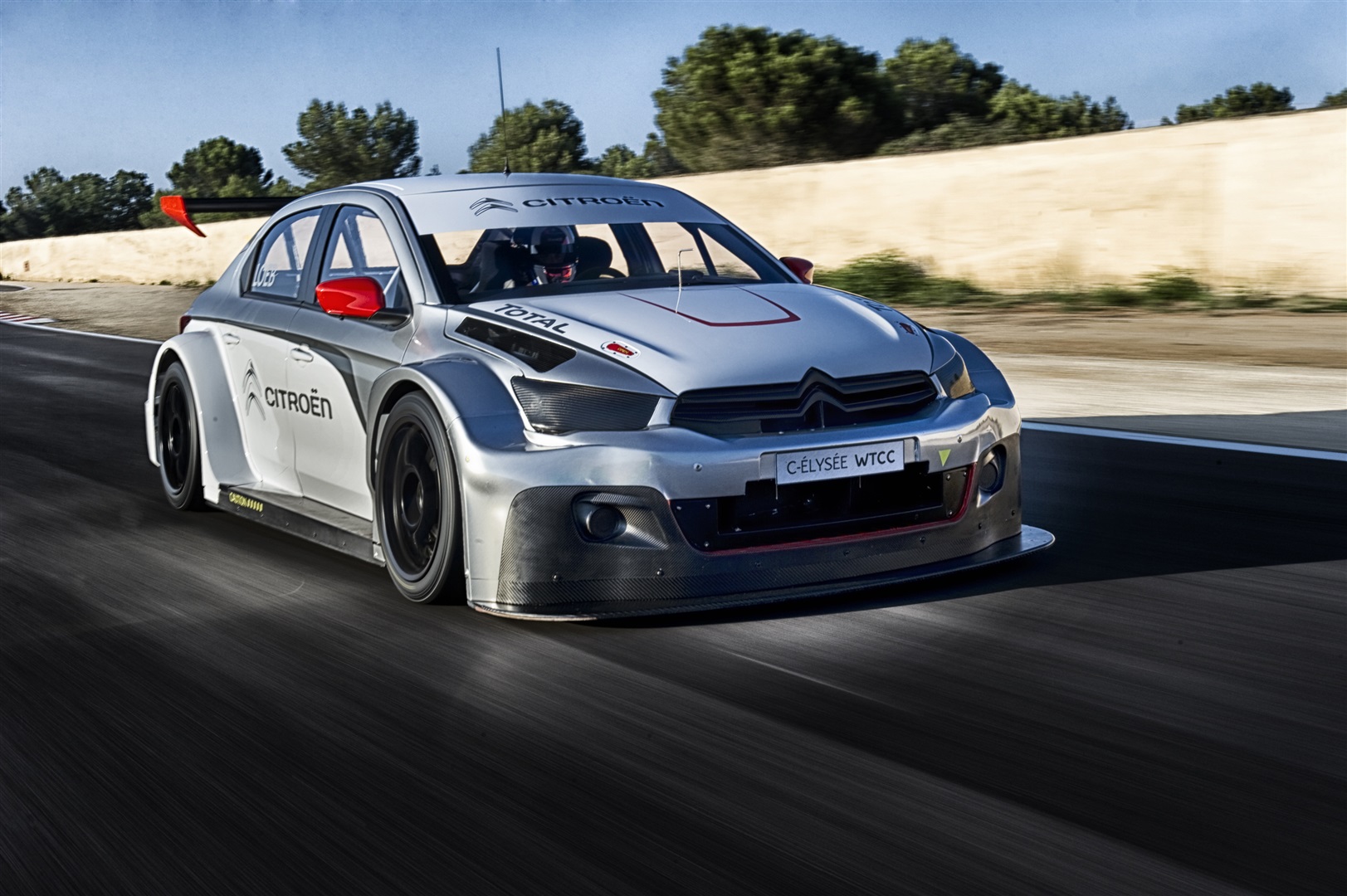
Some months ago, Citroën Racing announced the decision to join the 2014 WTCC with 4 drivers: the four-time WTCC winner Yvan Muller, the nine-time WRC champion Sébastien Loeb and F1 test driver Jose Maria Lopez for the complete season and Chinese Ma Qing Hua for five rounds. As a part of this decision, and being entirely new in the discipline, the team identified the importance of having a driving simulator in order to support its drivers in learning new tracks.
The STATIC Simulator, entirely implemented by VI-grade, will be installed prior the beginning of the championship at Citroën Racing premises in Versailles and used for the preparation of the FIA World Touring Car Championship.
“We are confident that driving simulator provided by VI-grade will help our drivers a lot in getting familiar with all different tracks of the WTCC” said Xavier Mestelan-Pinon, technical director at Citroën Racing. “Our drivers tested VI-grade solution before taking a final decision and their feedback was very positive. This helped us to select the right partner for implementing a driving simulator. We are now all working around the clock in order to have the simulator ready for the start of the season. We also appreciated the fact that with VI-grade products we will have the possibility to use the C-Elysée WTCC both for off-line simulations and on our driving simulator.”
“We are extremely happy to provide our driving simulator technology to a company like Citroën Racing that always played a very important role in motorsport activities”, said Guido Bairati, International Sales Director, VI-grade. “We are also very proud to be appointed Citroën Racing Technical Partner and to help Citroën Racing drivers to take the lead and set the pace in the upcoming WTCC Season.”
The STATIC Simulator by VI-grade is a professional solution that allows OEMs, Tier1 suppliers and Research Institutes to use driving simulator to start bridging the gap between physical testing and simulation. The simulator is based on the same VI-DriveSim software package that is used on COMPACT Simulator and on DiM, but is also fully compatible with 3rd party software solutions. This makes it possible to upgrade the static simulator to a dynamic simulator later on, leveraging previous investments. HMI, Vehicle Dynamics, NVH and ADAS are some of the disciplines that could be developed using a static simulator by VI-grade. Cylindrical screen and professional projectors make it possible to reach very high level of realism and to give driver an immersive driver experience. Thanks to the real-time hardware infrastructure, static simulator is also suitable for software-in-the-loop and hardware-in-the-loop applications.
About Citroën Racing
Universidade de São Paulo adopts the VI-DriveSim Technology
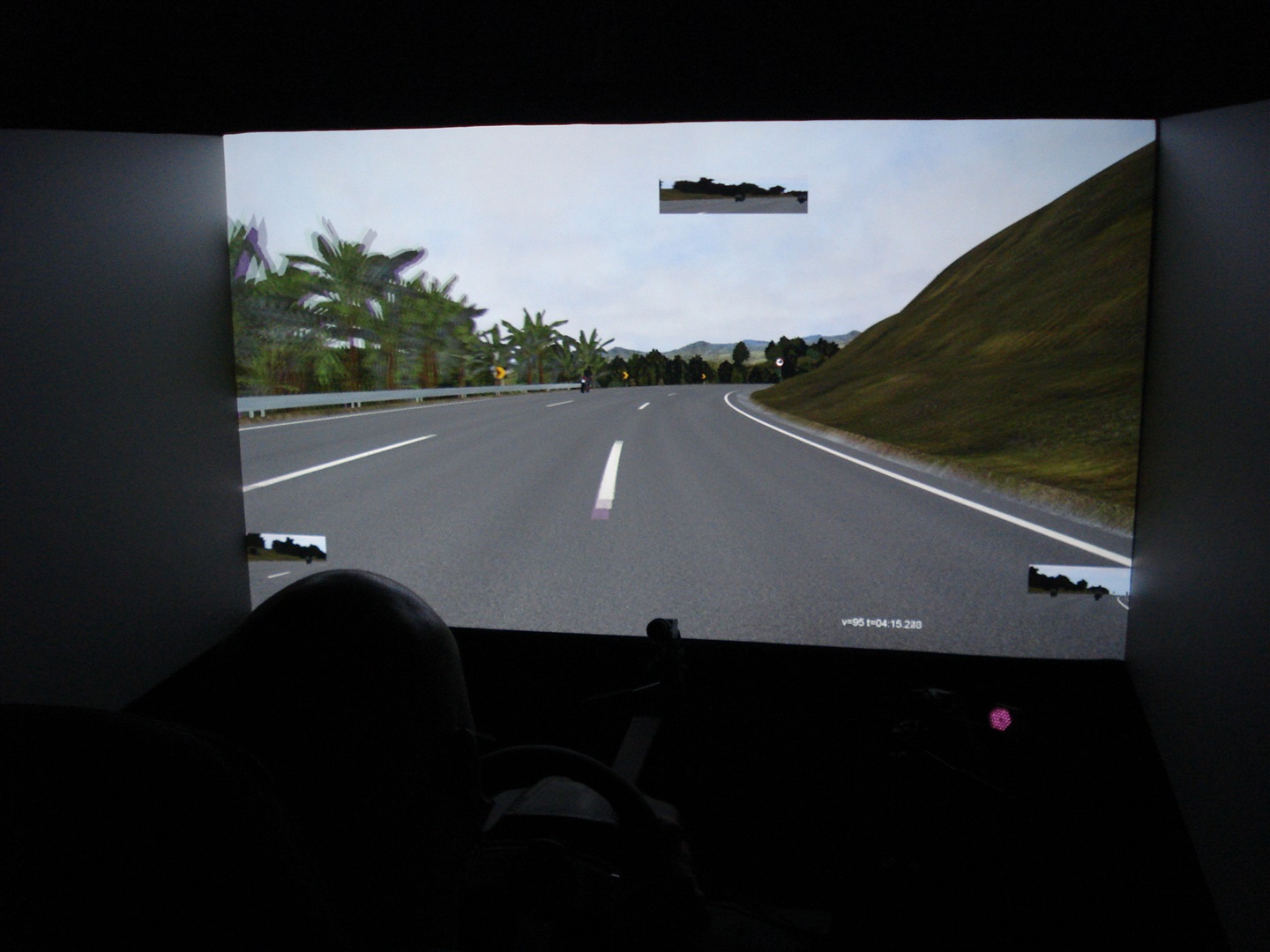
Marburg, March 24th, 2014 – VI-grade, the leading provider of best-in-class software products and services for advanced applications in the field of system level simulation, today announced that the Brazilian academic institute “Escola de Engenharia de São Carlos” from Universidade de São Paulo” is installing the breakthrough driving simulator technology VI-DriveSim Static to investigate new methods to improve road and vehicle safety.
The project is realized in collaboration with PSA do Brasil, a strategic VI-grade customer in the Brazilian territory; the Brazilian vehicle manufacturer will provide a realistic cockpit suitable for the static simulator, a selection of VI-CarRealTime vehicle models as well as experienced technical support.
“We are impressed with the technology offered by VI-DriveSim and decided to adopt it for our activities,” said Ana Paula C. Larocca, Doctor Professor from the Department of Transportation Engineering of the Escola de Engenharia de São Carlos from the Universidade de São Paulo. “We will use the VI-DriveSim solution to perform a series of road safety studies, investigating the behaviour of the driver on a selected 10-miles portion of the highway in Sao Paulo area that statistically shows a higher-than-average accident rate. In detail, thanks to an eye-tracking device, we will use VI-DriveSim to virtually investigate the influence on the driver’s reactions to different layouts of road signs.”
“We are extremely happy to report another successful installation of VI-DriveSim in South America”, said Guido Bairati, Sales Director, VI-grade. “We are looking forward to the outcomes of this exciting application of our VI-DriveSim solution conducted by Universidade de São Paulo and PSA do Brasil. This project is also very important for us since we are going to integrate our static simulator technology with products from high quality partners for traffic simulation and eye tracking systems.”
About VI-DriveSim
VI-DriveSim is a revolutionary turnkey solution, which provides automotive engineers with a complete set of innovative, integrated driving simulators for a new generation approach to system-level simulation, allowing companies to bridge the gap between virtual prototyping and testing. VI-DriveSim provides the ability of "feeling" the results of your simulations in a very immersive environment starting from early phases of the development process. Based on a compact driving simulator architecture with respect to conventional simulators and powered by VI-grade's flagship product VI-CarRealTime, VI-DriveSim enables a seamless combination of any source of real-time signals and allows an instantaneous two-ways synchronization with ADAMS Car, the de-facto worldwide standard solutions for automotive engineering. VI-DriveSim is available in two different configurations: static and dynamic, and is fully scalable, meaning that it is possible to upgrade from static to dynamic simulator recycling virtually all components that have been already purchased. For further information, click here.
About Multicorpos
Volvo Car Corporation orders revolutionary driving simulation technology from VI-grade and Saginomiya