Transnet Freight Rail predicts wheel wear with VI-grade railway solutions
About VI-Rail
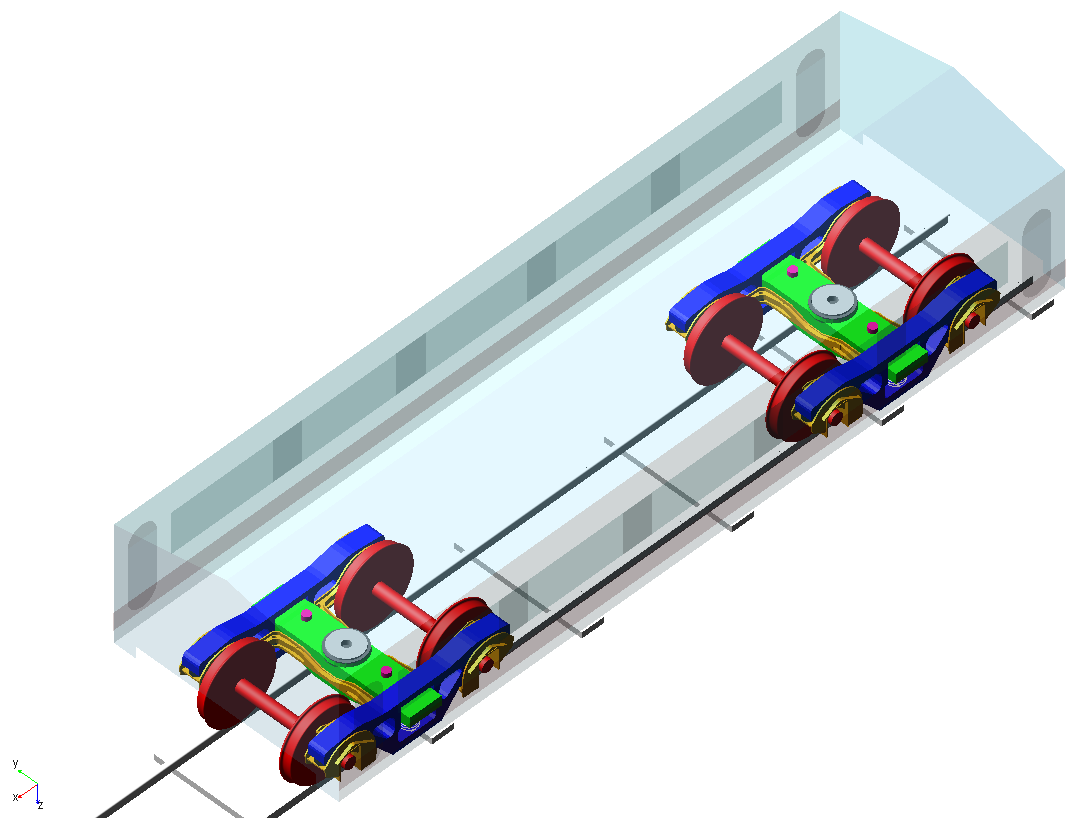
VI-Rail is the specialized railway simulation software from VI-grade. VI-Rail enables to quickly build a complete, parameterized model of a new railway vehicle, easily define its suspension, wheelset, wheel-rail contact, and other vital characteristics. Running through a battery of simulations it is possible to determine the vehicle’s stability, derailment safety clearance, track load, passenger comfort, and more. The performance of a railway vehicle design can be optimized virtually in the computer, before cutting a single piece of metal or running a single physical test. VI-Rail users can instantly see the effects of design changes on railcar performance in high-speed animation, easily detecting component interferences, excessive wear, instability, and performance limitations. Users can also plot key parameters in graphs to compare results from different designs.
About Transnet
About ESTEQ
VI-grade successfully completes installation of DiM Driving Simulator at Volvo Car Corporation
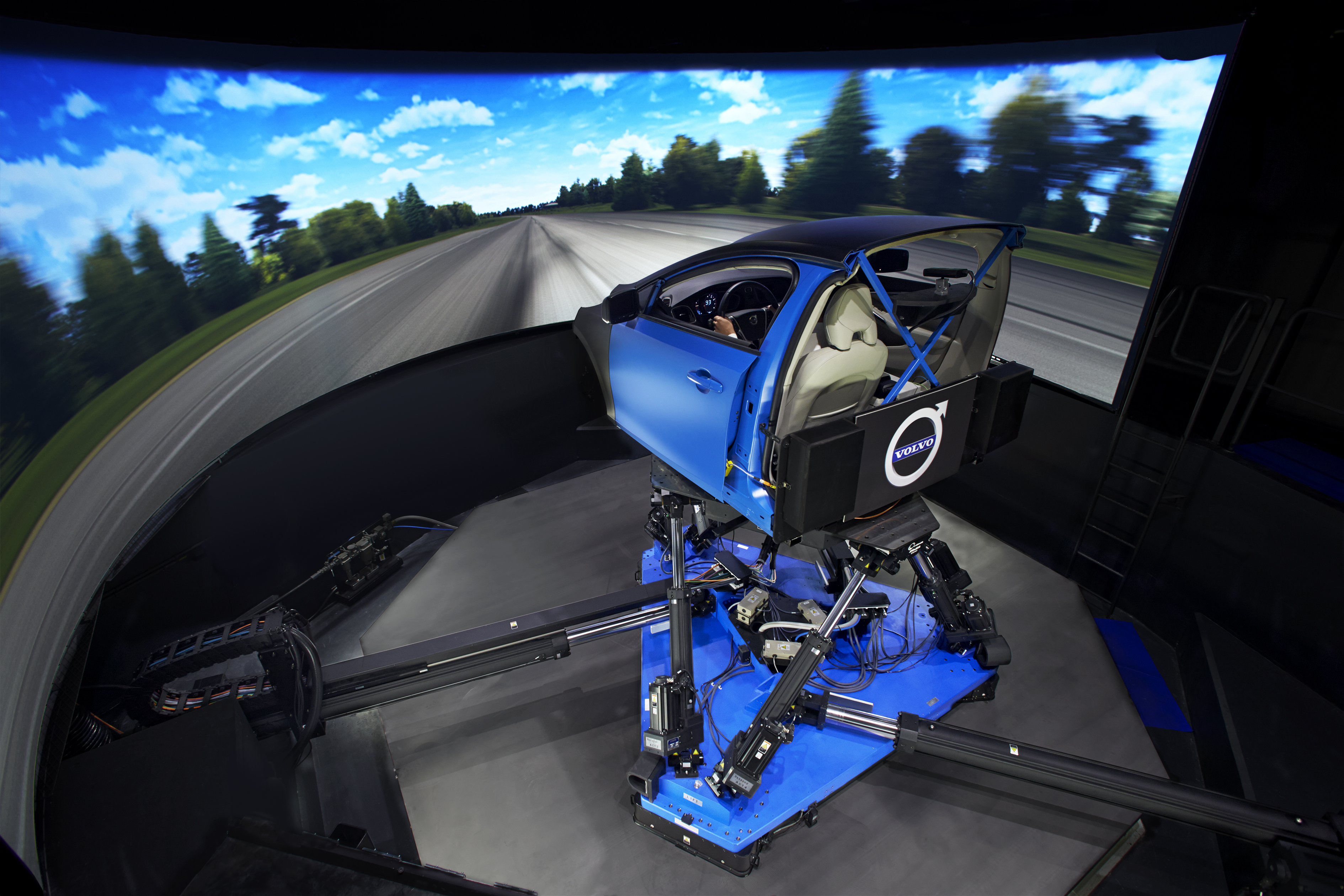
The 9 degrees-of-freedom DiM® platform has been designed in order to take full advantage of VI-MotionCueing as well as of all other software technology developed by VI-grade and its partners. The DiM® concept enables the extension of the motion envelope and the separation of low and high frequency contributions, which makes this type of motion platform unique and suitable for both vehicle dynamics and ride studies.
“The DiM complements our tool chain and allows us to physically experience our simulation models using human test drivers” says Carl Sandberg, Vehicle Dynamics Concept Engineer at Volvo Car Corporation. “The simulator emphasizes the human centric approach Volvo is known for, allowing driving dynamics and active safety systems to be experienced in a realistic environment right from the start of the development process.”
“We are extremely happy to report this commercial success at Volvo Car Corporation”, said Guido Bairati, Sales Director, VI-grade. “Together with our sales representative in Sweden CAE Value, with technical partner Saginomiya and other technology vendors like Concurrent, Sim.Co.VR, Barco, VIRES and Imtec we have installed this complex vehicle simulator as a turn-key solution at the Volvo premises. Volvo officially adds today to the growing list of customers that chose to believe in the superior value of our technology.”
For additional information on how Volvo Car Corporation uses VI-grade’s DiM technology, please check the paper presented by Carl Sandberg at the 2015 VI-grade Users Conference available at this link (login required for download)
VI-grade Supplies MRacing Formula SAE Team with a COMPACT Simulator
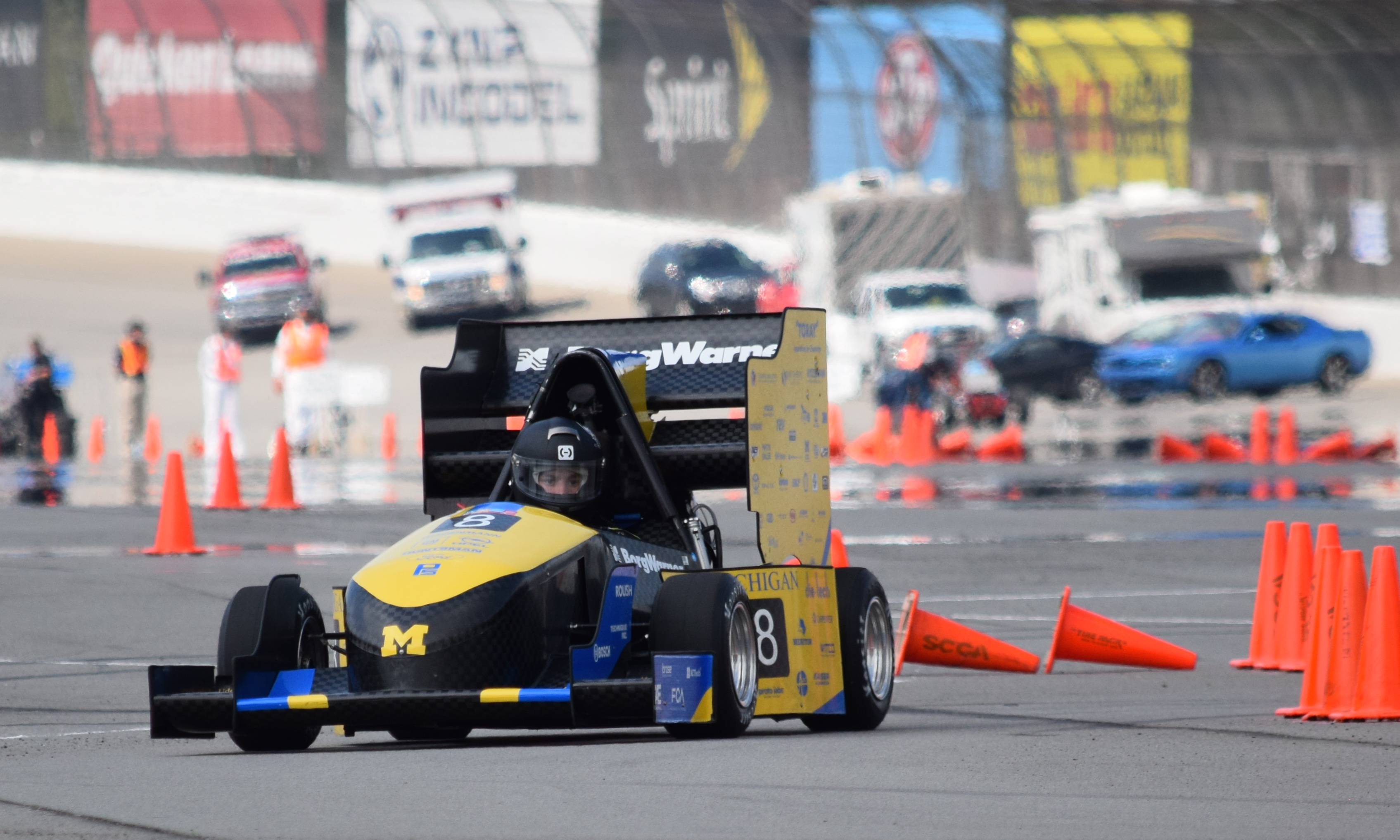
Marburg, July 21st, 2015 – VI-grade today announced that the MRacing Formula SAE Team of the University of Michigan has adopted VI-grade's COMPACT Simulator. In detail, the simulator will be used to support chassis and controls development for formula SAE vehicles.
“We have already put in many hours on tuning our VI-CarRealTime model, which creates a significant advantage as we move to the next level: using VI-DriveSim” said Peter Karkos, 2016 MRacing Technical Director. “The main value from the adoption VI-grade's COMPACT Simulator in our team comes from the potential time that will be saved through physical testing of different suspension setups, aero packages, drivetrain packages, etc. In addition, the relatively low-cost of setting up the system is perfect for our situation of being a college race team.”
“The most important feature is our ability to quickly correlate the computer model to our real-life vehicle by having a driver be able to give immediate feedback. It can eliminate months of tedious tests, and will allow for rapid improvements once we have an accurate model” added Karkos. “Additionally, the simulator enables our team to continue to develop the vehicle and have drivers learn how to drive it during the off-season. Due to the weather conditions, there are many months when our team cannot take the vehicle out for testing, so it is crucial to be able to virtually optimize the setup of our racing cars on the simulator in preparation for the upcoming FSAE competitions.”
“We are very excited about our continuous collaboration with the University of Michigan,” said Brian Cheung, Director of System Level Simulation Inc. “Major racing teams in all series are using vehicle simulation of all kinds to increase competitiveness in an environment with less physical testing and demands for more performance, and we are looking forward to further supporting the success of the MRacing team.”
About the COMPACT Simulator
The COMPACT Simulator provides all main features of VI-grade Driving Simulators in a reduced space. It features a driver’s seat, a fully-adjustable steering wheel, dashboard, pedals, gear stick and screen and it can be placed directly in your office. It is the perfect solution for those companies that want to start using a Driving Simulator to boost simulation activities and to test models in real-time whilst getting a subjective feeling.
The COMPACT Simulator from VI-grade is the ideal tool for automotive OEMs that wish to prepare models to be used for a more advanced simulator (both STATIC and DiM) and that need to quickly test specific components. The COMPACT Simulator is also an ideal solution for Tier 1 suppliers who need to make sure that their components will work well when inserted into a more complex vehicle model. This kind of simulator can also be used by universities and research centers to develop and test dedicated control algorithms, as well to expose their students to driving simulator technologies.
About University of Michigan College of Engineering
Founded in 1854, the University of Michigan College of Engineering is one of the premier Engineering schools in the world. The school’s strong partnership with automakers later led to the formation of MRacing Formula SAE in 1986. With over 25 years of experience, the team is able to continually pushing the envelope of vehicle design. In the summer of 2011 the team proved the value of this history by rising to #1 in the world after 6 consecutive top 10 competition finishes. With many of the same engineers still on the team, a newly formed business sector, and new exciting industry partnerships, MRacing is well-equipped to continue succeeding on an international level for the foreseeable future.
KTM-Sportcar selects VI-Automotive to optimize vehicle dynamics and reduce laptime of race cars
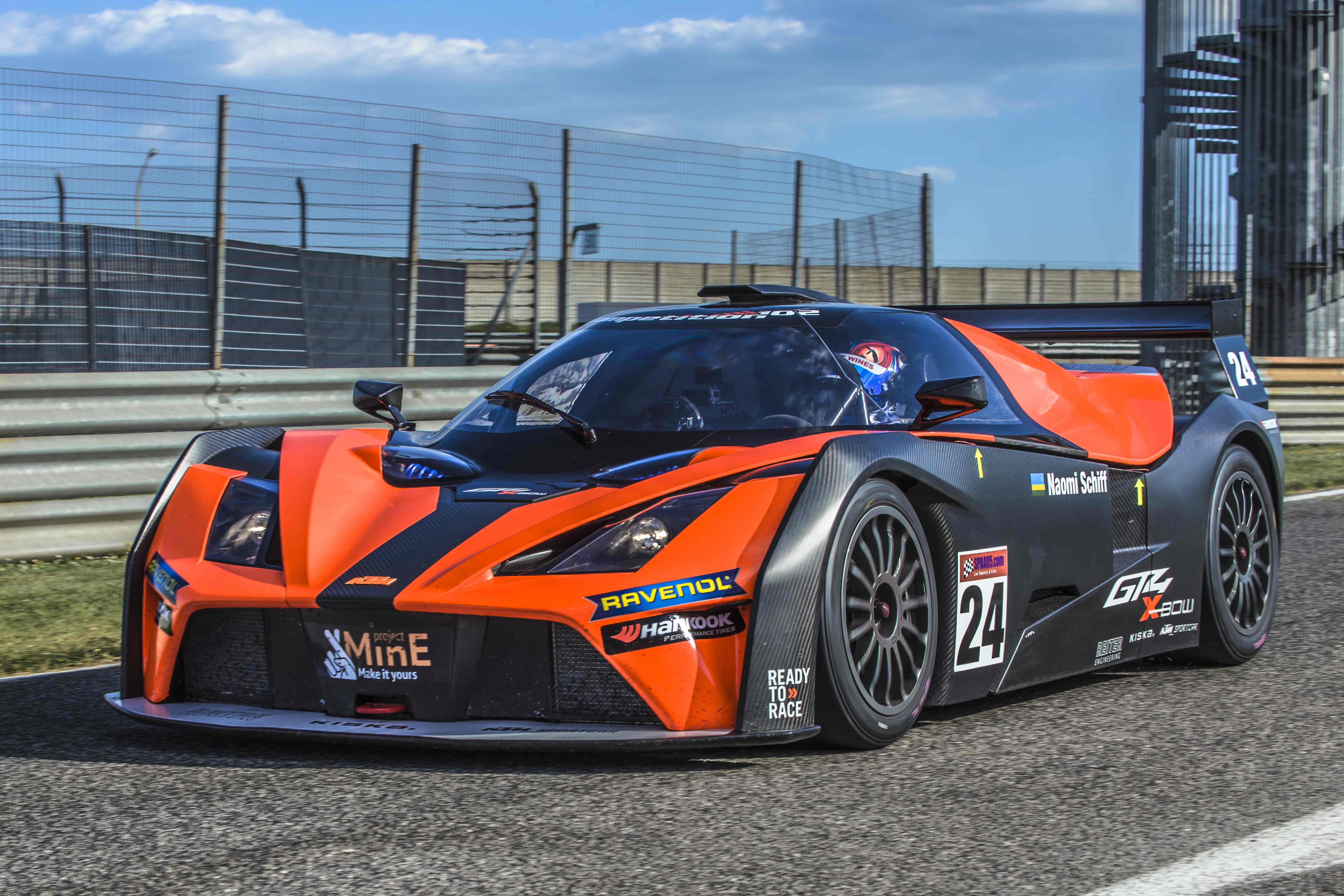
In detail, VI-Automotive will be used on the KTM X-Bow vehicle to carefully analyze vehicle dynamics and to reduce lap time by means of the sophisticated VI-grade driver controller: based on the database of the actual X-Bow, KTM will derive new models to be used either on race tracks or on roads. The software will be used for vehicle dynamics as well as to evaluate the loads on different relevant points of the car as - together with CFD software – to perform vehicle optimization on race tracks.
“We understood right from the beginning that VI-Automotive could have helped us in setting up race cars in the best way” says Juergen Gumpinger, Managing Director, KTM-Sportcar. “To avoid high development and testing costs, we decided to use the software to obtain a robust initial design as well as to achieve a good start setup for the race track. We also particularly appreciated the integration of VI-Automotive into the reliable general-purpose MSC Adams software, as well as the capability of meeting the objectives thanks to the special knowledge in race cars shown by the VI-grade team.”
“We are very excited about the collaboration with KTM Sportcar” says Guido Bairati, Sales Director of VI-grade. “We are looking forward to supporting the success of this well-known company, supporting the team to better understand the physics and the behaviour of their car in different conditions, ultimately enabling them develop even better cars.”
About VI-Automotive
track. The vehicle is driven on a two or three dimensional track profile by a sophisticated driving program which pushes the car to its limits! A specialized and extremely fast quasi-static lap time prediction program is entirely linked to the model database. Validation is continuously performed in close collaboration with customers, and this helps improving the methods and the accuracy of the program prediction: one example is the validation of a GT car model running on the LeMans track.